
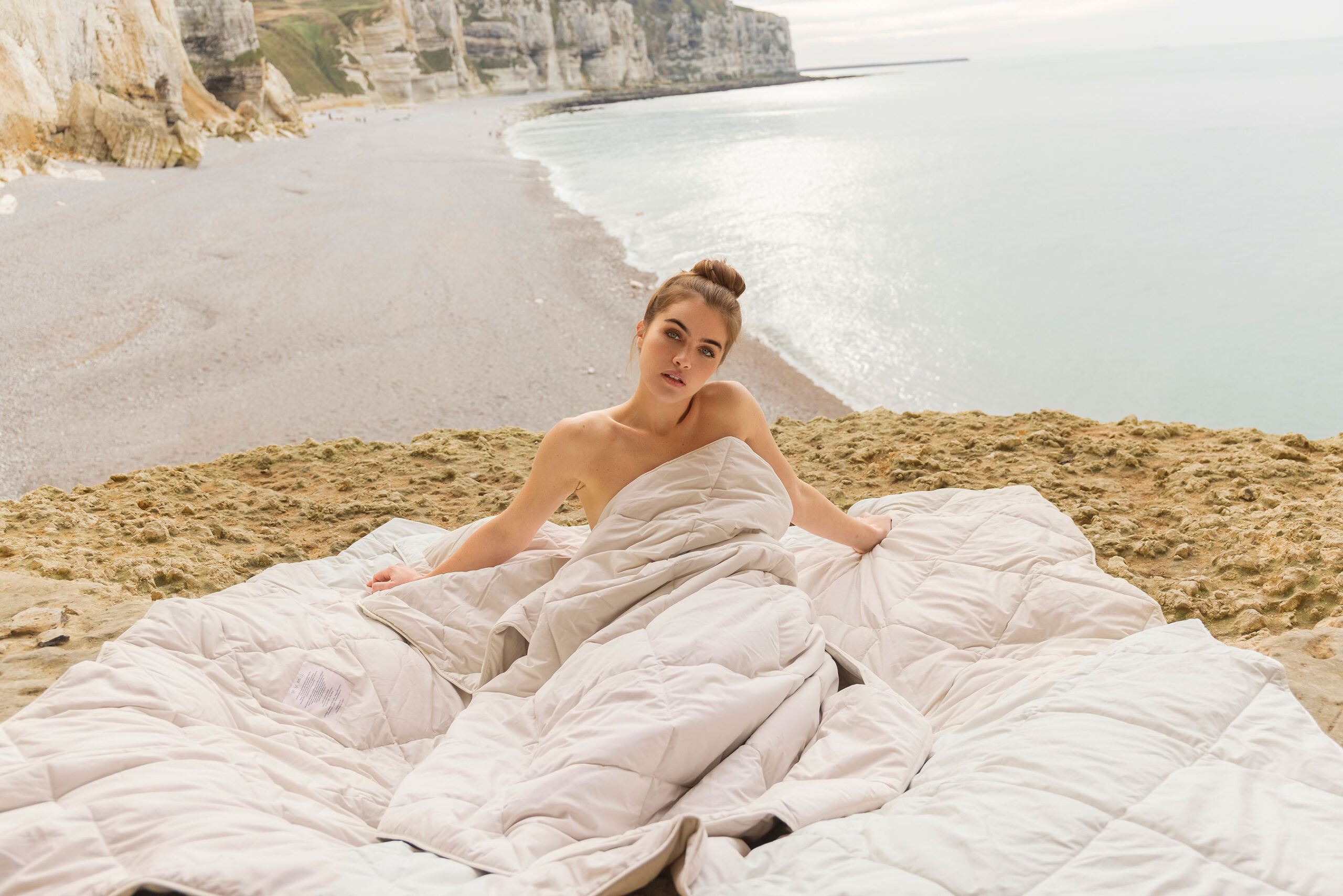
Alpaca Duvet: The Complete Guide to Choosing Yours
Choosing an alpaca duvet means first taking a step aside. Far from aisles overrun with synthetic filling and questionable labels, alpaca fiber represents a natural alternative in its own right. In short, it is neither an anecdotal niche nor a simple passing trend. It addresses specific needs: sleeping without excess heat, avoiding allergens, investing in durable bedding. This guide brings together everything you need to know to understand the material, compare options, and make an informed choice. Thus, whether you are discovering it for the first time or wish to explore it further, you will find the essential answers here.
Why Alpaca Stands Out as a Reference Material in Bedding
The alpaca is a camelid native to the high Andean plateaus, raised for millennia by the Quechua and Aymara peoples. Notably, its fleece is harvested once a year without slaughtering the animal. This is why these conditions partly define the final quality of the fiber. Contrary to certain representations, alpaca is not a variant of sheep’s wool. Nevertheless, it is a structurally different fiber, with specific properties that give it particular interest in high-end bedding.
Indeed, its most notable characteristic is its hollow structure. However, each alpaca fiber is tubular. Indeed, air is trapped within it, creating natural thermal insulation without requiring high weight. Thus, a lightweight and effective filling is achieved. Moreover, its precision in thermal regulation exceeds what synthetic fibers can offer.
Furthermore, alpaca is naturally devoid of lanolin—a second decisive advantage. This grease, present in varying amounts in sheep’s wool, is responsible for numerous allergic skin or respiratory reactions. Its absence in alpaca fiber makes it an intrinsically hypoallergenic filling—without chemical treatment, without the addition of desensitizing agents. This is why, for people with reactive skin or children, this advantage is difficult to overlook.
The Properties of an Alpaca Duvet: What Concretely Changes in Daily Life
The properties of a filling cannot be read on a technical sheet: they are felt night after night. Indeed, here are the functional qualities of an alpaca duvet that make a difference in actual use.
Active Thermoregulation
Alpaca fiber absorbs body moisture without creating a sensation of dampness. It captures excess heat when the temperature rises, and releases heat when the temperature drops. This regulatory capacity is valuable for those whose internal temperature varies during the night. Now, this phenomenon is more common than one might think. Notably, it affects people subject to hormonal variations, stress, or light sleep. With an alpaca duvet, these variations are absorbed without the sleeper having to uncover or cover themselves.
Breathability and Absence of Suffocating Effect
Dense synthetic duvets, even of quality, tend to create a thermal bubble around the body. In contrast, alpaca allows air to circulate freely. Thus, heat is not trapped but regulated. Yet, this is not simply a matter of comfort. Indeed, a duvet that breathes reduces nighttime perspiration and durably improves sleep quality.
Relative Lightness
Moreover, with equivalent insulating capacity, an alpaca duvet is lighter than a traditional wool duvet. Furthermore, the weight of a duvet influences sleep quality. Too heavy, a filling compresses, hinders movement, and can aggravate certain joint pains. Ultimately, the lightness of alpaca is a functional quality, not merely aesthetic.
Resistance to Dust Mites
Dust mites feed on keratin and proliferate in humid environments. Alpaca fiber regulates moisture better and is naturally less attractive to these microorganisms than wool or down. Thus, it constitutes an environment less conducive to their development. Notably, this point interests people suffering from respiratory allergies or asthma related to dust mites.
What Weight to Choose for Your Alpaca Duvet
The weight—in grams per square meter—is the main lever for adapting to your thermal needs. This is why it deserves to be chosen with care. Now, there is no universal weight. In other words, this choice depends on your morphology, your metabolism, and the season.
Light Weight: 300 to 450 g/m²
For example, for warm bedrooms or summer months, this weight is suitable for people who are naturally warm. A light alpaca duvet offers gentle and breathable protection without risk of overheating. It also works as a supplementary duvet on already warm bedding.
Intermediate Weight: 450 to 650 g/m²
The most versatile choice, often designated “all seasons.” This weight suits the majority of sleepers in bedrooms maintained between 17 and 20°C. It comfortably accompanies mid-seasons and temperate winters. This is the positioning chosen at Maison Eraen for our reference duvet. Indeed, it is a balance of lightness-insulation-breathability, suitable for nine to ten months of use per year.
Generous Weight: 650 g/m² and Above
For example, for people who are sensitive to cold or poorly heated bedrooms, this level of filling retains all its effectiveness. Thus, at this weight, the alpaca duvet maintains its relative lightness. It remains more airy than a thick wool duvet, while offering substantial thermal insulation.
An alternative consists of opting for a “duo” system: two light duvets, stackable according to the seasons. This system, more expensive to acquire, offers maximum modularity and can cover the entire year with two distinct pieces.
The Cover and Manufacturing: The Criteria That Truly Make the Difference
The quality of a duvet is not limited to its filling. The cover, the manufacturing process, and certifications determine the durability, comfort, and consistency of the product.
The Cover: Certified Organic Cotton Percale
A quality cover must meet three criteria: breathability, mechanical resistance, and absence of harmful chemical substances. Organic cotton percale certified Oeko-Tex 100 fulfills these conditions. Its tight weave limits filling loss while allowing air to circulate freely. At Maison Eraen, this cover was chosen for consistency. A natural duvet deserves a cover that is equally so.
The Artisanal Manufacturing Process
Good fiber can produce a mediocre duvet if manufacturing is neglected. Carding—the operation that opens and aligns the fibers—determines the regularity of the duvet. Thus, insufficient carding creates denser zones and less insulated ones, with discomforts perceptible from the first nights. Quilting, meanwhile, fixes the filling inside the cover. In contrast, well-mastered manual quilting prevents filling shifts over time. This phenomenon is common in industrial duvets, which lose their volume within a few years.
At Eraen, each duvet follows a precise path. It includes: hand sorting of fibers, washing with organic soap, traditional carding, workshop quilting, and manual inspection at each stage. It is work that takes time—and is justified precisely because it takes time. To learn more about our approach, you can consult the story of Maison Eraen.
Certifications: Objective Benchmarks in an Opaque Market
The natural bedding market is not exempt from vague marketing claims. Faced with terms like “natural,” “organic,” or “eco-responsible” often used without verifiable foundation, independent certifications constitute the most reliable benchmarks. Oeko-Tex Standard 100 guarantees the absence of harmful chemical substances on each component of the finished product—cover and filling. It is a certification that applies to tested articles, not to declared processes.
Price, Care, and Lifespan: What to Anticipate
The Price of an Artisanal Alpaca Duvet
A quality alpaca duvet represents a real investment. Entry-level prices are around €750 for a 140×200 cm format with careful filling and a certified cover. This price reflects several concrete realities: the relative rarity of alpaca fiber on the global market, the cost of manual collection, and the artisanal labor time that each duvet requires.
However, the ten-year comparison with a synthetic duvet renewed two or three times nuances this impression of high cost. A well-maintained alpaca duvet does not depreciate: it retains its volume, properties, and appearance well beyond the usual market guarantees. Discover our all-season alpaca duvet, available in 140×200, 200×200, and 240×220 cm.
Care: A Few Simple Precautions
Alpaca fiber is naturally resistant to odors and not very attractive to dust mites: in regular use, regular airing (open window, away from direct sunlight) is sufficient to maintain the freshness of the filling between washes. Moreover, the washing frequency is one to two times per year depending on use.
For washing, here are the precautions to observe:
- Machine wash: wool or delicate program, 30°C maximum, gentle spin (600 rpm maximum)
- Hand wash: lukewarm water, mild pH-neutral soap, abundant rinsing without wringing
- Drying: flat or in a machine at low temperature (40°C), with two or three tennis balls to redistribute the filling
- Do not iron, do not dry clean
With these precautions, an alpaca duvet retains its properties and volume for many years without felting or sagging—a durability that synthetic duvets cannot offer.
Durability and Environmental Commitment
Choosing a natural fiber duvet is also a choice in favor of long-term durability. Synthetic duvets release microplastics with each wash, accumulate in water filtration systems, and often end up in landfills after a few years of use. Alpaca, meanwhile, is a biodegradable fiber from farming whose environmental footprint is notably lower than that of intensive farming. The entire Eraen production is designed to reduce intermediaries, value human expertise, and limit waste at each stage.
How to Make Your Choice: Summary
To summarize the determining criteria in choosing an alpaca duvet:
- The filling: verify that the fiber is 100% alpaca, without mixing with other wools or synthetic fibers
- The cover: prefer organic cotton percale certified Oeko-Tex 100
- The weight: adapt it to your thermal sensitivity and your bedroom temperature
- The manufacturing: inquire about carding, quilting, and quality controls—a manufacturer transparent about its process deserves your trust
- Certifications: they objectify promises that words alone cannot guarantee
A well-chosen alpaca duvet fades away to let sleep happen—neither too warm nor too light, naturally healthy, durable over time. It meets an expectation that industrial duvets struggle to satisfy. At Maison Eraen, each duvet is handcrafted, inspected at each stage, designed to accompany you night after night for many years—because good sleep cannot be delegated to a commodity product.